
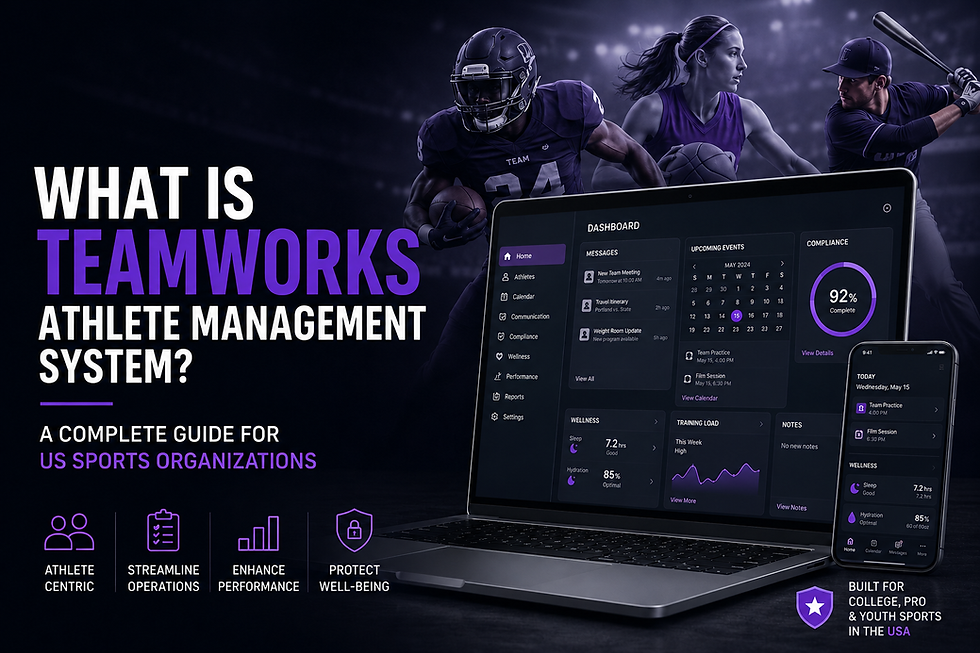
What Is Teamworks Athlete Management System? A Complete Guide for US Sports Organizations
Introduction
Coaches, athletic trainers, sports scientists, physicians, and administrators often collect information in separate spreadsheets, devices, and applications. That fragmentation makes it difficult to build a reliable picture of athlete availability and development.
The Teamworks Athlete Management System centralizes athlete performance, wellness, training, availability, and approved medical information. Authorized staff use profiles, dashboards, reports, and alerts to coordinate workflows.
Teamworks AMS is primarily the athlete-data and human-performance layer. Communication, scheduling, nutrition, recruiting, and other functions may be delivered through separate Teamworks products, so buyers should confirm the exact packaging.
What Is Teamworks Athlete Management System?
Teamworks AMS is an athlete management system that brings information from athletes, staff, testing systems, and technology into one environment. Its purpose is to replace isolated records with structured workflows that departments can use together.
An organization might use it to collect wellness responses, record testing, import GPS measurements, update availability, and review changes over time from controlled athlete records.
Teamworks acquired Smartabase, whose human-performance capabilities became part of its ecosystem. Existing customers should verify current migration and support arrangements.
How Does Teamworks Athlete Management System Work?
The platform is configured around an organization’s teams, roles, data definitions, and performance processes. A typical workflow follows five stages.
1. Define the Athlete Data Structure
The organization defines teams, seasons, assessments, wellness questions, availability categories, alerts, and permissions. An athlete data management system cannot fix inconsistent definitions; terms such as “available” and “modified” must mean the same thing to every user.
2. Collect Athlete and Performance Information
Data may come from questionnaires, staff assessments, training records, performance tests, imports, devices, or APIs. Common fields include sleep, fatigue, soreness, training participation, testing results, and rehabilitation milestones.
Compatibility should never be assumed. Before buying, verify the exact device, metrics transferred, synchronization frequency, historical-data access, and responsibility for resolving integration failures.
3. Organize Data in Athlete Profiles
Information can be associated with an athlete, team, session, competition, testing period, injury, or development plan, creating a longitudinal record.
4. Present Information Through Dashboards and Alerts
Dashboards can show wellness, testing, availability, workload, completion, and rehabilitation trends. Alerts may flag missed check-ins, unusual responses, restrictions, or milestones.
An alert is not a diagnosis. It should prompt an authorized professional to review the evidence and speak with the athlete before deciding what action is appropriate.
5. Coordinate and Document Staff Decisions
Authorized staff may adjust a plan, document restrictions, schedule follow-ups, or monitor rehabilitation. The software supports information flow; qualified professionals remain responsible for decisions.
Give Your Sports Organization Better Tools to Manage Athletes
Core Features of Teamworks Athlete Management Software
Centralized Athlete Profiles
Profiles can combine team membership, testing, wellness, availability, observations, development records, and documents, reducing duplicate entry across seasons.
Wellness and Readiness Check-Ins
Athletes may report fatigue, sleep, soreness, stress, mood, and recovery. Because responses are subjective, questionnaires should be brief, clearly explained, and used consistently.
Performance Testing and Benchmarking
Staff can record strength, speed, conditioning, mobility, jump, and sport-specific assessments. Results may be compared with baselines or appropriate squad benchmarks, although one test should not become a final judgment.
Workload and Training Monitoring
The platform may combine session duration, perceived exertion, participation, competition exposure, GPS measurements, and recovery indicators. It is broader than basic player tracking software, although tracking still depends on compatible sources.
Availability, Medical, and Rehabilitation Workflows
Authorized personnel may manage injuries, restrictions, rehabilitation plans, and return-to-participation stages. Detailed medical records should remain restricted to appropriate personnel.
Configurable Forms, Reports, and Dashboards
Organizations can configure screenings, check-ins, reports, assessments, and development reviews, then summarize them for different users.
Teamworks AMS vs Teamworks Hub and Sports Management Software
Teamworks AMS and Teamworks Hub address connected but different needs. AMS focuses on athlete data, performance, wellness, and related clinical workflows. Hub is generally associated with team operations such as communication, calendars, travel, and information distribution.
Other products may support nutrition, recruiting, academics, and athlete engagement. Teamworks AMS is therefore not identical to an all-purpose sports team management app or sports club management software.
During a demo, ask which product owns each workflow, whether information passes between products automatically, and whether additional licenses are required.
Who Uses Teamworks Athlete Management System in the USA?
Professional Teams and High-Performance Programs
Professional and Olympic programs can coordinate testing, availability, performance, and rehabilitation across departments and locations.
Colleges and Universities
College departments may support sports medicine, performance science, and reporting through athletics management software. They must independently assess FERPA, medical-data handling, NCAA obligations, and institutional policies.
High Schools, Academies, and Youth Programs
Youth programs may manage testing, development, and availability, but need suitable notices, consent, safeguarding, restricted access, and retention rules. Cost and complexity should match their needs.
Benefits of an Athlete Data Management System
One athlete record: Reduces disconnected and duplicate documents.
Consistent collection: Standard forms improve comparability.
Faster coordination: Staff can review availability and actions.
Long-term context: Historical records show development over time.
Operational visibility: Administrators can identify missing assessments.
Better context: Data complements conversations, observation, and professional expertise.
These benefits depend on adoption. Poor forms and inconsistent participation simply centralize unreliable data.
Teamworks AMS Integrations and Data Connections
An AMS may connect with GPS systems, heart-rate devices, force plates, timing gates, strength equipment, wearables, video platforms, and analytics tools.
Before approving an integration, ask:
Which devices and fields are supported?
How frequently does data synchronize?
Can historical records be imported?
How are duplicates and failures handled?
Who supports the connection?
Are there additional fees?
Can normalized data be exported?
This is where specialist player tracking software development or custom integration work may be needed.
Implementing Teamworks Athlete Management Software
A successful rollout normally includes:
Discovery: Document users, workflows, systems, metrics, and desired outcomes.
Governance: Define data owners, permissions, consent, retention, and correction processes.
Configuration: Build teams, forms, dashboards, alerts, and staff roles.
Migration and integration: Clean historical records, map fields, and validate connected devices.
Pilot: Test one representative team with real athletes and workflows.
Training: Teach each role only the processes and data relevant to its work.
Optimization: Audit access, remove unused forms, and monitor integration failures.
When comparing athlete management software, ask vendors to demonstrate failure scenarios, not only ideal workflows.
US Security, Privacy, and Compliance Considerations
Athlete information can be sensitive even when it is not legally protected health information. Organizations need access controls, encryption, audit logs, retention rules, incident procedures, and vendor oversight.
HIPAA does not automatically apply to every sports organization or athlete record; applicability depends on the entities and data flows involved. Student records may raise FERPA considerations, while youth programs face consent and safeguarding responsibilities. Obtain qualified advice.
Limitations of Teamworks Athlete Management System
Teamworks AMS can require configuration, data cleaning, training, and change management. Integrations may add fees, excessive dashboards create noise, and poorly designed alerts cause fatigue. Total cost can include other products, implementation, maintenance, and administration.
Most importantly, player management software cannot guarantee injury prevention or better results. It organizes evidence; people interpret and act on it.
What Does Teamworks Athlete Management System Cost?
Pricing is generally customized around users, products, integrations, migration, configuration, training, support, and contract duration.
Request a three-year cost model covering licenses, implementation, staff time, integrations, support, and exit costs. Confirm that data can be exported in a usable format.
Missing Angle: Data Governance Matters More Than Dashboards
Most articles ignore whether the underlying information can be trusted. Define metric ownership, historical-edit permissions, conflict resolution, and correction processes before implementation.
Every value should have a definition, unit, source, timestamp, and responsible owner. Organizations should also decide what happens to information when an athlete changes teams or leaves the program.
The effectiveness of an athlete management system depends less on the number of dashboards it offers and more on the quality, consistency, permissions, and governance of the data behind those dashboards. |
This governance layer is also essential when integrating AI. Model-generated observations should be identified, reviewable, and separated from verified medical or staff records.
Teamworks AMS vs Custom Sports Software Development
Teamworks AMS may be suitable when its standard workflows and integrations cover most requirements and the organization wants an established ecosystem. Custom software may make more sense when proprietary performance models, unusual roles, specialized devices, or product ownership create strategic value.
A hybrid approach can use Teamworks for established workflows and a custom platform for proprietary analytics, AI, or video. SportsFirst provides custom sports software development, integrations, and sports app development services.
What Is Teamworks Athlete Management System?
Teamworks Athlete Management System is a configurable platform for collecting and organizing athlete performance, wellness, training, availability, testing, and approved medical information. Data can enter through athlete questionnaires, staff assessments, imports, connected devices, and supported integrations. Authorized sports professionals can review the information through athlete profiles, dashboards, reports, alerts, and workflows. The platform supports decision-making but does not replace medical expertise, coaching judgment, or direct communication with athletes. |
Final Takeaway for US Sports Organizations
Teamworks AMS can provide a consistent view of athlete information, but results depend on configuration, integrations, adoption, and disciplined data governance.
Before buying, run a real-team pilot, test failures, review privacy responsibilities, and calculate total cost. The right sports management software should improve decisions and coordination—not simply produce more dashboards.
Bring Athlete Data, Performance, and Team Operations Into One Platform
Frequently Asked Questions About Teamworks Athlete Management System
What does Teamworks Athlete Management System do?
It centralizes athlete performance, wellness, training, testing, availability, and approved medical information. Authorized staff can use forms, dashboards, reports, and alerts to coordinate athlete-related workflows.
Is Teamworks AMS the same as Teamworks Hub?
No. Teamworks AMS primarily supports athlete data and human-performance workflows. Teamworks Hub generally focuses on communication, scheduling, travel, and team operations. An organization may use both within the wider Teamworks ecosystem.
Can Teamworks AMS prevent athlete injuries?
No platform can guarantee injury prevention. Teamworks AMS can organize workload, wellness, testing, availability, and medical information so qualified professionals can identify changes and make informed decisions.
Does Teamworks AMS integrate with GPS and wearable devices?
It may support sports-technology integrations, but compatibility varies. Verify the exact device, metrics, refresh frequency, historical-data access, support responsibility, and additional cost before purchasing.
Is Teamworks Athlete Management System suitable for youth sports?
It may support youth academies and high-performance programs, but the organization must implement suitable parent or guardian consent, safeguarding, role-based access, age-appropriate notices, and child-data protections.
