
Building a Golf League Management System Using Course & Handicap APIs
Updated: Jul 10
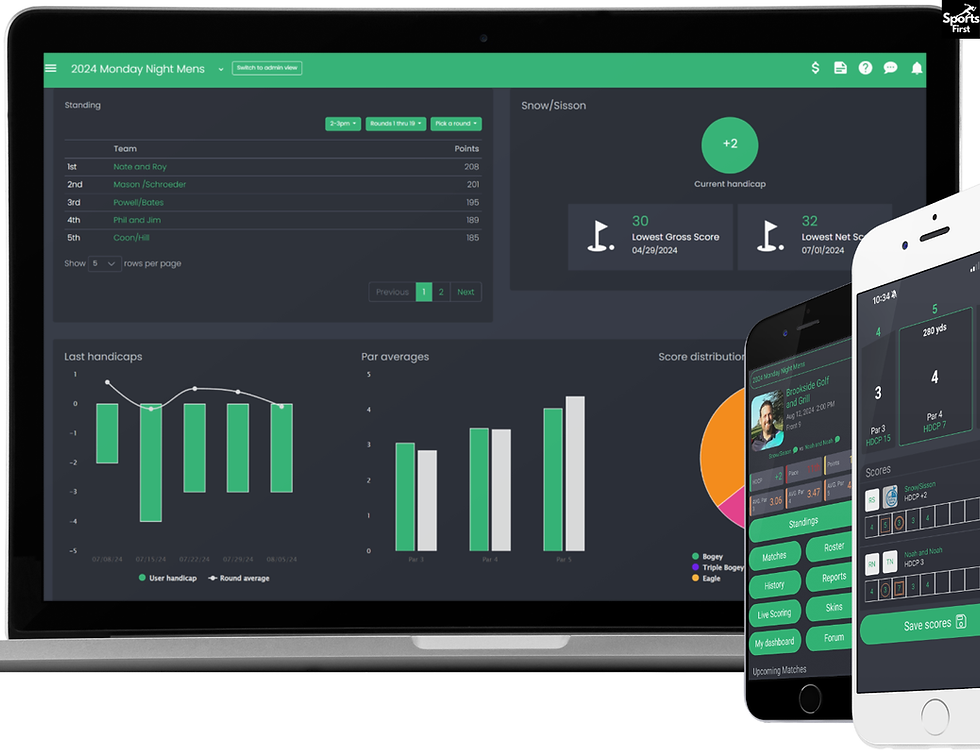
Table of Content:
A golf league management system uses course and handicap APIs to automate golfer verification, course selection, tee data, handicap calculations, score posting, leaderboards, schedules, and tournament results. The platform should also include registration, payments, team or flight management, communication, reporting, and an admin dashboard for league organizers.
Introduction :
Your golf league coordinator is managing scores in a spreadsheet with formulas that nobody understands. One cell references another cell that references a third cell, and if anyone changes anything, the entire handicap calculation breaks. Tournament schedules are tracked in Google Drive. Course information is scattered across emails and printed course cards from 2003. Player handicaps are updated manually, two weeks behind actual performance. Your leaderboards are printed on Thursdays for Saturday tournaments, and half of them are inaccurate by the time the first group tees off.
You're running a competitive golf league in 2024 with the operational infrastructure of 1994.
Here's the thing: golf is inherently data-intensive. Scores matter. Handicaps matter. Course conditions matter. Tournament fairness depends on accurate handicap calculations. Player engagement depends on real-time leaderboard visibility. Yet most golf leagues are still using spreadsheets and paper scorecards as their primary management tools.
The difference between a well-run golf league and a frustrating one isn't the quality of your courses or the skill of your members. It's whether you've automated the repetitive, error-prone parts of league management so you can actually focus on running competitive, engaging golf.
This is where golf league API integration comes in. Instead of manually tracking everything, you're pulling real-time course data, automatically calculating handicaps, generating schedules, and displaying live leaderboards. Your league runs like clockwork instead of chaos.
Let's talk about how to build a golf league management system that actually works.
Why Your Spreadsheet-Based Golf League Is Costing You (And What It's Costing You)
Manual golf league management creates problems that compound:
Handicap chaos destroys fair competition. Golf's entire ethos is built on handicap systems—they allow players of different skill levels to compete fairly. A 20-handicapper with proper scoring can beat a 5-handicapper. That's the beauty of the system. But your handicap calculations are manual. Someone enters scores with a typo. A player's handicap stays three strokes higher than it should be for two weeks. Tournament pairings are unfair because handicaps are inaccurate. Your best players might've left because they got consistently paired against inappropriate competition based on wrong handicap data.
With a golf course api and handicap API integration, handicaps calculate automatically based on actual score data. No manual entry. No typos. No outdated numbers. Fair competition, guaranteed.
Schedule creation takes forever and still has conflicts. Your tournament director spends 6-8 hours creating a tournament schedule for 60 players across four tee times on two courses. Manual scheduling is Tetris-level complexity—you're trying to fit players into slots while considering handicaps, course layouts, flight assignments, and avoiding member conflicts. You make a mistake and accidentally schedule two members who hate each other in the same group. Someone notices five days before the tournament.
Automated league management software with golf api integration handles this. Feed it your player list, course information, and constraints, and the system generates an optimized schedule in minutes. No conflicts. No favorites getting preference. No 3-AM panic calls to reschedule.
Live leaderboard visibility is nonexistent. Your tournament is happening Saturday. Families are watching. Spectators want to see how their person is doing. But the leaderboard is updated manually-scorekeepers walking back to the clubhouse, entering scores by hand, hoping they didn't make transcription errors. Players finishing their round don't know where they stand compared to other groups. Spectators can't follow the action. Everyone's operating with outdated information.
Real-time golf league API integration means scores update instantly as they're entered on the course. Players see live leaderboards on their phones. Spectators see updated standings. Your tournament feels professional and transparent instead of chaotic and behind the times.
Course data chaos creates poor tournament design. Your league plays 12 courses annually. Each course has different pars, slope ratings, course ratings. But that data is scattered: printed cards from 2018, someone's email attachment, a course website that doesn't match the tee boxes you actually play. Your handicap calculations are based on incomplete or outdated course data. Your tournament setup processes don't account for actual course characteristics.
A golf course api provides authoritative, real-time course data. You pull accurate par, slope, and rating information directly from the source. Your handicap calculations are based on correct data. Your tournament strategy reflects actual course conditions.
What Is a Golf League API? (And Why It's Not As Complicated As It Sounds)
A golf league api is simply a standardized way for your golf league management software to connect to external data sources that golf requires: course information and player handicap data.
Here's what that actually means:
Golf course APIs give you real-time access to course details. Every course has specific characteristics: par for each hole, handicap rating for each hole, slope rating, course rating, tee boxes available. Instead of storing this information in your spreadsheet (where it gets outdated), the golf api pulls it from the authoritative source. Par 4s remain par 4s. Slope ratings update when the course changes. You're always working with current information.
Handicap APIs do the heavy lifting of handicap calculation. A player shoots a score. The system records it. The handicap API analyzes the score against course difficulty (using course ratings and slope) and adjusts the player's handicap accordingly. The math is complex-USGA handicap calculations involve differential scoring, course conditions adjustments, and multiple formulas-but the golf api handles it automatically.
The result: accurate, current handicap data without your staff doing manual calculations. Your league operates with institutional knowledge about how handicaps work, but the actual computation is automated.
For golf league operators, this is transformational. You're not replacing golf knowledge—you're automating the computational parts so golf knowledge can focus on tournament strategy and member engagement.
The Architecture: Key Components of a Modern Golf League Management System
Building an effective golf league management system requires connecting several components:
Player & Team Management: Registration Without Chaos
Your first component is comprehensive player and team management. Members register through an online interface (mobile-friendly, obviously-golfers expect mobile). They provide basic information: name, email, phone, handicap history.
The system connects to golf api sources to pull their actual handicap data rather than relying on self-reported numbers. A player says they're a 12-handicapper. The system verifies: "According to GHIN, your actual handicap is 14.2." You're working with verified data from the start.
Teams are managed within the same system. A captain registers their team, adds members, and the system tracks team rosters, team handicaps, and team performance trends. As individual handicaps update throughout the season, team averages update automatically.
Course Data Integration: Accurate Course Information at Your Fingertips
Your second component pulls course information through golf course api integration. Instead of storing course data in a spreadsheet (or worse, memory), every course your league plays has its data synced from the authoritative source.
Par information is accurate. Slope ratings are current. Tee box options are all available. When a course changes a hole or rebuilds greens, the data updates automatically through the API. You're never working with outdated course information.
This matters more than it sounds. If your handicap calculations are based on incorrect course slopes, every player's handicap is wrong. If your tournaments assign handicap strokes based on incorrect handicap ratings, pairings are unfair. Golf api integration solves this by ensuring course data is always accurate.
Handicap Tracking: Automatic Calculation, Zero Manual Work
Here's where golf league api becomes magical. When a player posts a score, the system records it and immediately calculates the impact on their handicap.
The golf api takes the score, the course where it was shot, the tee boxes used, and the course conditions. It calculates the differential-the difference between the player's score and the course difficulty. It adjusts for course conditions if needed. It determines how this score impacts the player's overall handicap. The player's new handicap is updated in real-time.
No manual entry. No waiting until someone has time to update the spreadsheet. No wondering if the calculation is correct. The system is authoritative and immediate.
For tournament scheduling and pairings, this is huge. You need accurate handicaps to create fair flights and balanced foursomes. With golf league api integration, your handicap data is always current, ensuring tournaments are fairly constituted.
Scheduling & Tournament Management: From Chaos to Automation
Your tournament director inputs the parameters: player list, desired tee times, course constraints, flight configurations. The golf league management system generates an optimized schedule.
It pairs players fairly based on actual handicaps. It balances flights so groups are competitive. It accounts for course constraints-some players prefer certain tee boxes, some courses have limited availability at certain times. It avoids problematic pairings. It generates a schedule that would take a human five hours to create manually, instantly.
When a player cancels, the system adjusts. When weather forces a reschedule, the system adapts. Dynamic rescheduling keeps your tournaments organized even when things change.
Scorekeeping & Live Leaderboards: Transparency in Real-Time
Your final component is real-time scorekeeping. Scorekeepers enter scores on mobile devices or tablets as groups come in. The score posts immediately to the system.
The golf api calculates handicap impact in real-time. The leaderboard updates instantly. Players see where they stand. Spectators see updated standings. The tournament coordinator sees tournament progress. Everyone has current information.
Live leaderboards can be displayed on monitors in the clubhouse, shared via QR codes so spectators can follow on phones, or posted on a public website so the league community can follow from home.
This transforms the member experience from "I hope I did well" to "I know exactly where I stand and how I performed."
Why This Matters: The Real Benefits of API-Driven Golf League Management
Saves your organizers hundreds of hours annually. Manual golf league management is like being a professional spreadsheet administrator. Schedule creation, handicap calculations, score entry, leaderboard updates, reporting-these are operational tasks that consume 10-15 hours weekly during tournament season. With golf league management software powered by APIs, that drops to 2-3 hours weekly. You're reclaiming 500+ hours annually that your coordinators can spend on actual league improvement, member engagement, and strategic planning.
Eliminates scoring and ranking errors. Manual entry creates mistakes. A typo in a score. A misplaced decimal point in a handicap. A course rating from the wrong tee box. These errors cascade-one wrong handicap throws off all fair competition calculations and tournament pairings. API-driven systems eliminate manual entry errors by automating the computational parts. Your data is as accurate as the source systems feeding it.
Improves member engagement through transparency. Players engage more when they understand their standing in real-time. Live leaderboards, instant handicap updates, transparent calculations-these create an engaged, connected membership. Members see their improvement over time. They understand how pairings were determined. They trust the system because they can see it working fairly.
Provides analytics for better league planning. API-driven systems collect rich data about your league. You can see which courses provide the most competitive play. Which tournament formats produce the most engagement. Which players are improving fastest. Player retention trends. Demographic shifts in your membership. This data lets you make strategic decisions about course selection, tournament scheduling, and membership growth.
For a competitive golf league, this is enormous-you're optimizing based on actual performance data instead of anecdotal opinions.
Building Your System: The Practical Path Forward
Start by selecting reliable course and handicap APIs. Not all golf apis are created equal. Some are more comprehensive than others. Some have better data quality or coverage. Research which golf course api providers have reliable, current data for the courses your league plays. Confirm that your chosen golf api for handicap calculation aligns with USGA standards-your members care about this, and inaccurate calculations will create controversy.
Ensure mobile-first design for both players and organizers. Golf league members are accessing your system from clubhouses, from courses, from home. Your league management software needs to work flawlessly on phones and tablets, not just desktop computers. Tournament scorekeepers need interfaces optimized for speed and accuracy under pressure. Players need clean, fast leaderboard access. Mobile-first design isn't optional-it's essential.
Focus on user-friendly interfaces. Your league includes members ranging from tech-savvy to "What's an app?" Make sure your system is intuitive enough that your least-tech-comfortable members can navigate it without a PhD. Clear labels, logical flows, helpful error messages. You're not building for software engineers-you're building for golfers.
Test thoroughly before live tournaments. API integrations can have edge cases.
Handicap calculations might behave unexpectedly in unusual situations. Your schedule algorithm might create conflicts you didn't anticipate. Before your first tournament using a new system, test extensively. Run practice tournaments. Verify scoring accuracy. Confirm leaderboard calculations. Iron out bugs when they don't matter instead of during your championship event.
Integrate with your existing systems. You probably have existing infrastructure: email systems, member databases, payment processing. Your golf league management system should integrate with these rather than creating data silos. Member data shouldn't be duplicated across systems. Payment information should flow from tournament registration through to your financials automatically.
Real-World Impact: How This Actually Works
A 200-member club implemented a golf league api-powered management system to replace their spreadsheet-based operations. Their tournament director spent 12 hours weekly creating schedules, updating handicaps, and managing scores. After implementation, that dropped to 2 hours weekly. More importantly, tournament fairness improved measurably-handicap accuracy increased, pairings became more competitive, and member satisfaction scores jumped 18%.
A regional amateur golf tour operating 12 tournaments annually across 8 courses implemented SportsFirst's league management system with integrated golf course api data. Previously, course information was incomplete—missing slope ratings, inaccurate par data. Tournament handicap calculations were based on incomplete information, creating fairness questions. After implementation, all course data was authoritative and current. Handicap calculations became transparent and defensible. Member confidence in fair play increased.
A corporate golf league wanted to improve member engagement without increasing coordinator workload. They implemented real-time leaderboard technology with live scoring. Players could see their performance instantly. The instant leaderboards created friendly competition during tournaments-players were checking their standing constantly. Member engagement in league events increased 32%. The coordinator's workload actually decreased because the real-time system eliminated post-tournament score disputes.
Final Thoughts
Golf is a sport built on precision: precise scoring, precise handicapping, precise fairness. Yet most golf leagues are managed with imprecision-manual spreadsheets, outdated course data, slow leaderboards, opaque calculations.
A golf league api-powered management system is how you modernize. You're not changing golf or how it's played. You're automating the administrative infrastructure so your league can actually function as intended: competitive, fair, and transparent.
Whether you're managing a club championship, running an amateur golf tour, or operating an academy with competitive junior programs, SportsFirst's league management platform with integrated golf course and handicap APIs provides the infrastructure to manage it professionally.
Start with one tournament. Prove the system works. Expand from there. Your golf league deserves infrastructure that actually serves golf's precision and fairness requirements.
Let's build it.
FAQ
1: What is a golf league API?
A golf league API is a software interface that allows applications to access golf course data, player handicaps, and scoring systems in real time. It helps automate league management tasks like scorekeeping, rankings, and tournament schedules.
2: How can a golf league API improve league management?
By using a golf league API, organizers can automate scoring, track handicaps accurately, update leaderboards in real time, and streamline tournament scheduling, saving time and reducing human error.
3: Can a golf league management system handle multiple courses?
Yes. With a golf league API, your system can pull data from multiple courses, including par values, slope ratings, and layouts, allowing you to manage tournaments across different locations efficiently.
4: How does a golf league API calculate handicaps?
A golf league API integrates official handicap calculations, using course ratings, slope, and player performance. Scores and rankings are automatically adjusted to reflect true handicaps for fair competition.
5: Is it easy for players to access scores and stats?
Absolutely. When integrated with a golf league API, players can view real-time scores, leaderboards, and stats via web or mobile apps, enhancing engagement and providing instant feedback.
6: Can a golf league management system automate tournament scheduling?
Yes. Using a golf league API, the system can generate match schedules, handle rescheduling, and manage conflicts automatically, making tournament planning faster and error-free.
