
How AI Transforms Athlete Performance: Real Examples from Global Sports Programs
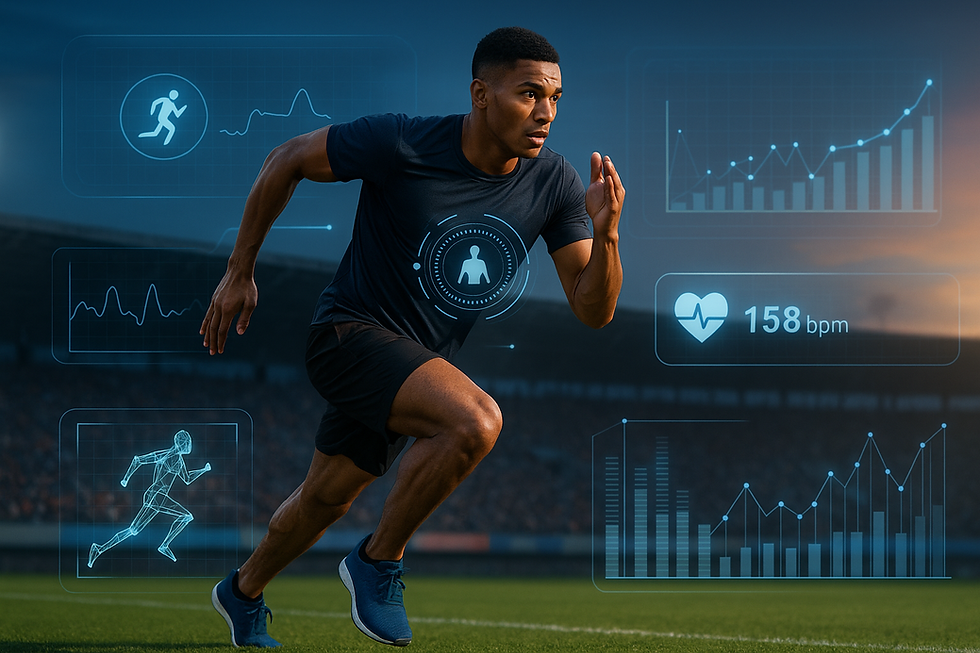
Athletes today don’t just train harder—they train smarter. And the reason is simple: AI has become one of the most powerful tools in modern sports.
From elite football academies in Europe to Olympic training centers in the US and Asia, AI-driven insights now influence how athletes warm up, how they move, how they recover, and even how they avoid injuries. What was once possible only through experienced coaches and manual video review can now be delivered instantly with intelligent systems.
At the center of this evolution is AI athlete performance analysis, a technology that allows teams and federations to understand their athletes like never before—objectively, accurately, and in real time.
This article explores how global sports programs are using AI to enhance performance, reduce injury risk, and build world-class athletes. And most importantly, how your organization can do the same.
The Shift: From Instinct-Based Coaching to Data-Driven Sports
For decades, coaching was driven by experience, intuition, and visual observation.
Coaches were trained to “read the game,” identify technical flaws, and estimate load and fatigue levels based on perception.
But athletes have become stronger.
Training schedules have become tighter.
Competition intensity has increased dramatically.
To keep up, teams needed more than intuition—they needed precision.
That’s where AI entered the world of athlete performance analysis and sports performance analysis, turning subjective observations into measurable, actionable insights.
What Is AI Athlete Performance Analysis?
In simple terms, AI athlete performance analysis uses machine learning, computer vision, motion science, and advanced statistics to evaluate an athlete’s performance.
It analyzes:
Movement patterns
Reaction speeds
Biomechanics
Load distribution
Strength progression
Tactical behavior
Injury red flags
Unlike traditional tools, AI doesn’t get tired, emotional, or biased—making it perfect for high-performance sports environments.
Why AI Matters More in 2026 Than Ever Before
Sports organizations worldwide face similar challenges:
Increasing workload on staff
Player burnout
Injury spikes
Lack of unified athlete data
Manual video analysis taking hours
Difficulty tracking individual development
AI solves most of these problems through automation and accuracy.
With AI sports analytics, teams and federations now get:
Instant insights
Predictive warnings
Personalized training plans
Objective performance scoring
Deep athlete analytics across seasons
This shift from reactive coaching to proactive intelligence is unlocking peak performance potential.
Global Sports Programs Already Using AI: Real Examples
Let’s explore how world-class institutions use sports AI analysis to stay ahead.
1. FC Barcelona & Real Madrid: Computer Vision for Motion Analysis
Top European football clubs use AI-powered computer vision to evaluate:
Gait mechanics
Explosive acceleration
Deceleration patterns
Knee valgus indicators
Optimal foot placement
AI systems automatically analyze training footage and provide AI performance tracking reports within minutes—helping coaches refine technique without delay.
This technology reduces injury risk and enhances long-term player development.
2. Australian Institute of Sport: AI for Workload Monitoring
Australia’s national training programs use AI to merge data from:
GPS devices
Wearables
Heart-rate monitors
Match intensity metrics
This combined athlete monitoring system predicts fatigue zones and detects early signs of overload.
The result: fewer injuries and better performance during international tournaments.
3. US Olympic Training Centers: Personalized AI Recovery Plans
AI tools track:
Muscle fatigue
Sleep quality
HRV variations
Recovery speed
Pre-competition readiness
This system uses sports data analysis to recommend personalized recovery strategies—keeping athletes fresh during critical phases.
4. Indian Cricket & Kabaddi Teams: AI-Led Tactical Breakdown
Teams in India are adopting sports analytics to evaluate:
Bowling consistency
Batting angles
Player positioning
Opponent weaknesses
Match scenarios
AI creates automated tactical reports from match footage, helping coaches develop more accurate strategies.
Teams in India are adopting sports analytics to evaluate:
Bowling consistency
Batting angles
Player positioning
Opponent weaknesses
Match scenarios
AI creates automated tactical reports from match footage, helping coaches develop more accurate strategies.
5. College Athletes in the US: AI for Talent Scouting
AI now helps universities evaluate:
Athletic potential
Movement efficiency
Game intelligence
Injury risk scores
This makes recruiting more objective and fair, bringing hidden talent to the spotlight.
How AI Improves Athlete Performance: The Core Benefits
1. Objective Performance Measurement
Humans see only what they can interpret. AI sees everything.
Whether it’s a sprint, jump, rotation, or swing, AI outputs quantifiable metrics that form the foundation of sports performance analysis.
2. Early Injury Detection
AI models analyze micro-variations in movement that humans often miss.
This helps identify:
Overuse patterns
Muscle imbalance
Asymmetrical load
Technique deviations
The result? Athletes avoid long-term injuries and stay available for more games.
3. Personalized Training Programs
Every athlete is unique. AI creates custom training recommendations based on:
Performance history
Fatigue patterns
Strength progression
Tactical role
This accelerates growth while reducing unnecessary workload.
4. Faster Tactical Decision-Making
With sports AI analysis, coaches get:
Automated heatmaps
Behavioral patterns
Opponent tendencies
Real-time positional data
This helps make better tactical calls during practices and competitions.
5. Long-Term Athlete Development Tracking
AI builds a complete athlete profile by merging:
Match stats
Training data
Biomechanical insights
Wellness metrics
This creates a powerful long-term development pathway for academies and national federations.
The Future: How AI Will Shape Athlete Development in the Next 5 Years
By 2030, AI systems will become even more advanced, with capabilities like:
Real-time biomechanical correction
Voice-based coaching assistants
Emotion analysis during gameplay
Neural fatigue prediction
Fully automated match breakdowns
Organizations that adopt AI early will gain a massive competitive advantage.
And that’s where SportsFirst comes in.
Why SportsFirst Leads the AI Revolution in Sports
At SportsFirst, we help academies, clubs, and federations integrate AI seamlessly into their workflow.
Our platforms bring together:
AI athlete performance analysis
motion tracking
automated tactical insights
deep athlete monitoring
team management tools
robust analytics dashboards
We don’t deliver software—we deliver transformation.
FAQ
1. How does AI actually improve an athlete’s performance on a daily basis?
AI improves performance by giving athletes precise, personalized feedback that humans alone can’t consistently provide. With AI athlete performance analysis, tools can detect movement flaws, track load levels, and measure progress with incredible accuracy. Whether it’s sprint mechanics, jump landings, or tactical positioning, AI transforms raw training footage into meaningful insights—helping athletes get better every single day.
2. Can AI replace coaches or sports scientists in the future?
Absolutely not. AI is powerful, but it’s a tool—not a replacement for human expertise. Instead, AI enhances coaching by providing objective sports performance analysis, real-time athlete analytics, and automated tracking. Coaches still make the final decisions, but they do so with more clarity and confidence thanks to data-driven insights.
3. How do global sports teams use AI to prevent injuries?
Injury prevention is one of AI’s biggest strengths. With AI performance tracking and athlete monitoring, systems can detect small abnormalities in movement or workload—often weeks before an injury occurs. For example, if an athlete overloads one leg more than the other, AI flags it early so coaches can adjust training before it becomes a serious problem.
4. Is AI only useful for elite teams, or can small academies benefit too?
AI is no longer only for big-budget clubs. Cloud-based platforms have made sports AI analysis affordable and accessible for academies, colleges, and grassroots programs. Even smaller setups can use AI to evaluate technique, build personalized development plans, and automate sports data analysis, giving young athletes the same opportunities as professionals.
5. What kind of data does AI use to analyze athlete performance?
AI uses a combination of video, wearable data, GPS tracking, biometric signals, and historical performance metrics. This gives a 360° view of an athlete, merging sports analytics, biomechanics, tactical insights, and recovery patterns. With all these data points combined, AI athlete performance analysis becomes incredibly accurate—allowing coaches to make smarter training decisions.
